
Built-In Entertainment Centers in San Ramon, CA
San Ramon Custom Cabinets connects San Ramon homeowners with local cabinet makers who build built-in entertainment centers, including media walls, TV cabinets, fireplace surrounds and floating consoles. It is a free referral service; the shop we introduce you to designs, builds and installs the unit.
A built-in media wall hides cords, houses equipment and anchors a living room or family room. The sections below cover the layout, ventilation and wiring details that separate a good unit from a bulky one.
Get a Free Entertainment Center Quote
Entertainment Center Designs
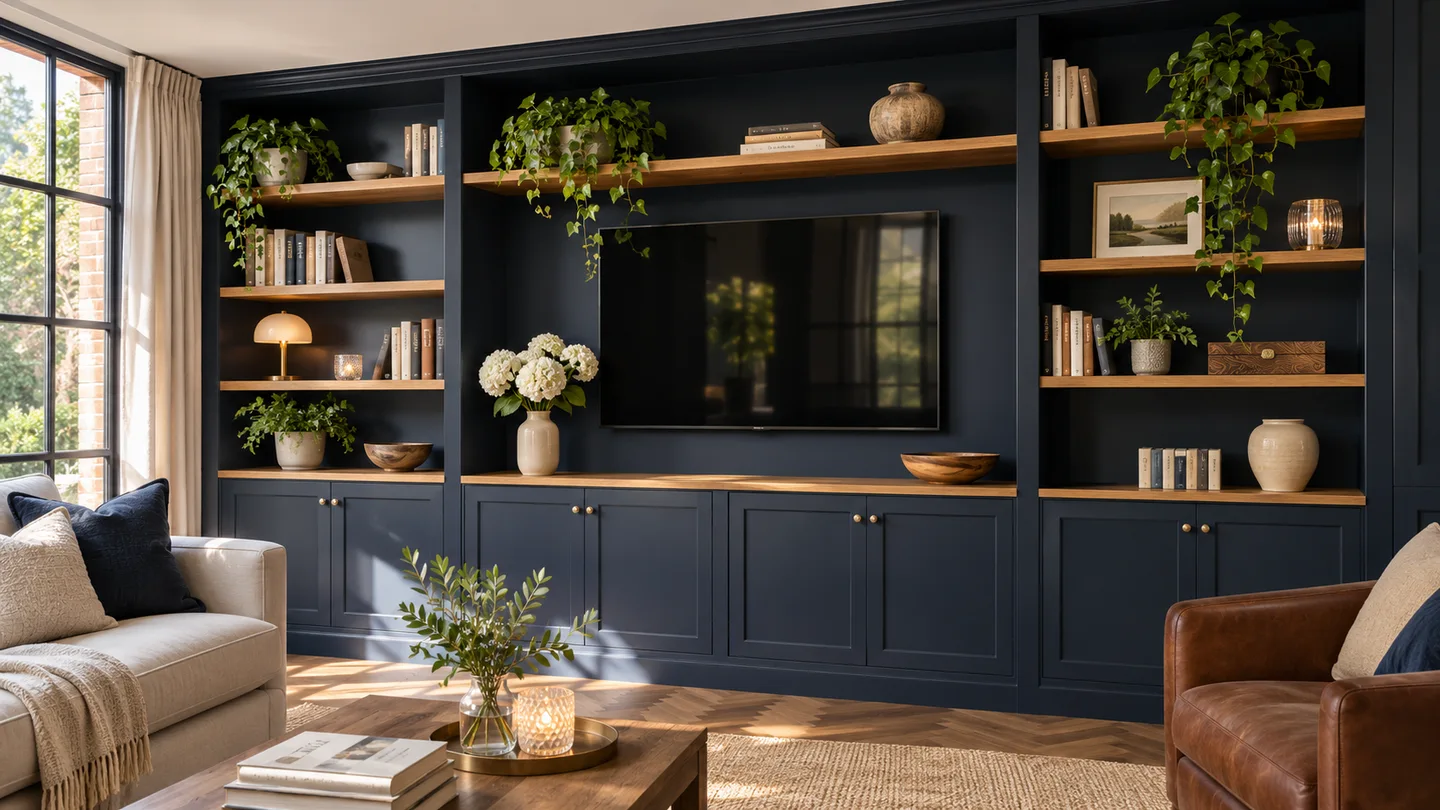
Full Media Walls
A floor-to-ceiling wall with a recessed TV niche, side cabinets, open shelves and a console below is the classic design. It works well in family rooms with 9- or 10-foot ceilings, and crown molding can tie it to the room.
Fireplace Surrounds With Flanking Cabinets
Many San Ramon homes have a fireplace as the room's focal point. Cabinets on both sides with bookcases above and a mantle or TV above the firebox create symmetry. Clearances to combustible material must follow the fireplace manufacturer and code, and heat above a wood-burning fireplace can damage a TV, so discuss the mounting height.
Floating Credenzas and Wall-Mounted Consoles
A floating console in walnut or white oak gives a clean, modern look and frees up floor space. It must be anchored into structural framing.
Hidden TV Cabinets
Doors that slide, fold or tilt hide the screen when it is off, popular in formal living rooms. A lift cabinet can raise the TV from a credenza, though it adds mechanical cost.
Home Theater Built-Ins
In a dedicated media room, speaker enclosures, equipment racks and acoustic panels integrate into the cabinet wall. Coordinate with the AV installer early.
Technical Details: Ventilation, Wiring and Seismic Safety
Ventilation for Equipment
Receivers, game consoles and streaming boxes generate heat. Ventilated panels, a perforated back, quiet fans or open slots keep equipment cool. Infrared remote signals often need a glass door or a repeater.
Wiring and Power
Cables run through chases to a hidden equipment cabinet, with power and low-voltage lines separated. A recessed outlet behind the TV allows a flush mount. An electrician installs new outlets or in-wall rated wiring; the cabinet maker builds the openings.
TV Size and Height
The center of the screen is usually near seated eye level, about 42 inches off the floor for many couches. Plan the TV niche from the actual TV dimensions plus the mount and a ventilation gap, and consider if you will upgrade to a larger screen.
Earthquake Anchoring
California homes should anchor tall cabinets and heavy units to wall studs. The cabinet maker should fasten units to framing and secure heavy items, since shaking can tip tall pieces.
Materials and Finishes
Painted vs. Stained
Painted maple or MDF gives a smooth contemporary look, and stained white oak, walnut or alder suits warmer rooms. A catalyzed lacquer or conversion varnish finish holds up to handling.
Panel Materials
Plywood is strong for long shelves and wall-hung boxes. MDF takes paint best on flat doors. Edge-banded melamine works inside. Look for CARB Phase 2 or TSCA Title VI compliant materials.
Lighting and Glass
LED strips in niches, picture lights and glass doors add depth. Plan driver locations so they remain serviceable.
Choosing a Cabinet Maker for a Media Wall
- Request drawings or a 3D rendering to confirm TV size and niche; see cabinet design and 3D rendering.
- Ask how large panels will be scribed to the ceiling, the fireplace and uneven walls.
- Ask who coordinates the AV integrator and electrician.
- Confirm how cabinets are anchored for earthquakes.
- Check how the unit is built in pieces so it can enter the room and be assembled on site.
Sizing and Proportions for Your Room
Choose Depth Carefully
Media cabinets are commonly 16 to 24 inches deep. A deeper unit holds a console or soundbar but takes more floor space, so check traffic paths and furniture distances.
Viewing Distance
A rough guide is that a 65-inch TV is comfortable about 8 to 10 feet away; bigger screens can sit farther. Use the viewing distance to set the niche size and cabinet width.
Balancing Open and Closed Storage
Open shelves display books and decor but collect dust; closed cabinets hide games and toys. Mix the two for balance. Include a drawer for remotes, chargers and controllers.
Built-In Entertainment Centers Beyond the Living Room
Media built-ins are no longer limited to the family room. Primary bedrooms often use a low credenza below a wall-mounted TV with tall storage on both sides. Game rooms and lofts add shelves for consoles, board games and collectibles. Even a kitchen or home office can use a small media nook. Coordinate the style with other built-ins, such as custom built-in cabinets, so the house reads as one design.
Questions to Ask Before Hiring
Since San Ramon Custom Cabinets is a referral service and not the builder, these are questions for the cabinet maker you speak with. A good shop answers them clearly in a written estimate.
- Do you build the unit in sections, and how do you hide the seams?
- How will the cabinet attach to studs and handle seismic safety?
- Can you coordinate the AV installer and electrician, and do you provide a cable path plan?
- What finish do you recommend, and how do you protect it from heat near a fireplace?
- What is included in the price: paint, lighting, trim and delivery?
Common Mistakes With Media Cabinets
The most frequent errors are a niche sized for last year's TV, no ventilation for the receiver, outlets placed behind the screen where they cannot be reached, and a fireplace TV mounted too high for comfortable viewing. Another is leaving no way to service cables; ask for removable panels. Planning these items in the drawing stage prevents expensive fixes after installation.
Entertainment Center Cost
Prices depend on width, height, material and extras. A modest console with open shelving can cost a few thousand dollars, while a full wall with fireplace surround, lighting and hidden storage often costs five figures in the Bay Area. Typical ranges only; a written estimate is what counts. Costs also include electrical work, paint, countertops and drywall repairs.
Get a Built-In Entertainment Center in San Ramon
Share your room and TV size, and we will connect you with local cabinet makers who build entertainment centers. It is free and there is no obligation.
Free quoteEntertainment Center FAQs
How high should a TV be mounted over a fireplace?
Heat and viewing angle matter. Many people prefer lower placement for comfort, so check the fireplace's heat output and consider a recess or a mantle.
Do built-in cabinets need ventilation for electronics?
Yes. Receivers and consoles produce heat, so use ventilation, perforated backs or fans, and leave space around the equipment.
Can I hide wires in a built-in?
Yes. Chases and pass-throughs route cables to an equipment cabinet, and an electrician can install in-wall wiring per code.
Can the cabinets be moved later?
Built-ins are fastened to the wall and sized to the room, so they are less portable than furniture. Some modular units are easier to remove.
Will a built-in fit a future larger TV?
Plan the niche slightly bigger than your current TV, or ask the designer about an adjustable panel.
How long does it take?
Many shops need several weeks to fabricate and a few days to install. Finishing and electrical may add time.