
Custom Built-In Cabinets in San Ramon, CA
San Ramon Custom Cabinets connects San Ramon homeowners with local cabinet makers who design and build custom built-in cabinets, including bookcases, media walls, fireplace surrounds, window seats, desks and fitted storage.
We are a free referral service, not the cabinet maker. Describe the wall or alcove you want to fill and a local shop will follow up to measure, design and give a written estimate.
Get a Free Built-In Cabinet Quote
What Custom Built-In Cabinets Are
A built-in is cabinetry made to fit a specific wall, niche or architectural feature and fastened to the structure so it looks like part of the house. Unlike freestanding furniture, it uses every inch from floor to ceiling and wall to wall, with trim that blends into your existing moldings.
Because every room is different, built-ins are almost always custom. A cabinet maker measures your space, builds the pieces in the shop, and installs and trims them on site.
Measuring and Site Conditions
The cabinet maker checks walls, ceilings and floors for plumb and level, locates studs, outlets, vents and any cable runs, and notes baseboard, crown and window casing profiles so the new work matches. Homes in San Ramon built in the 1970s through 2000s often have standard 8-foot ceilings, though many newer ones have taller.
Design and Drawings
Expect plan and elevation drawings showing shelf spacing, door and drawer layout, and trim. Adjustable shelves, concealed wire chases and lighting should be settled before fabrication.
Fabrication and Installation
Cabinet boxes are typically built from plywood or MDF with solid wood face frames and trim. Large built-ins are often made in sections, anchored to wall studs, and joined on site with scribed fillers and trim for a seamless look.
Types of Custom Built-In Cabinets
Built-ins serve many purposes. The right design depends on the room and what you need to store or display.
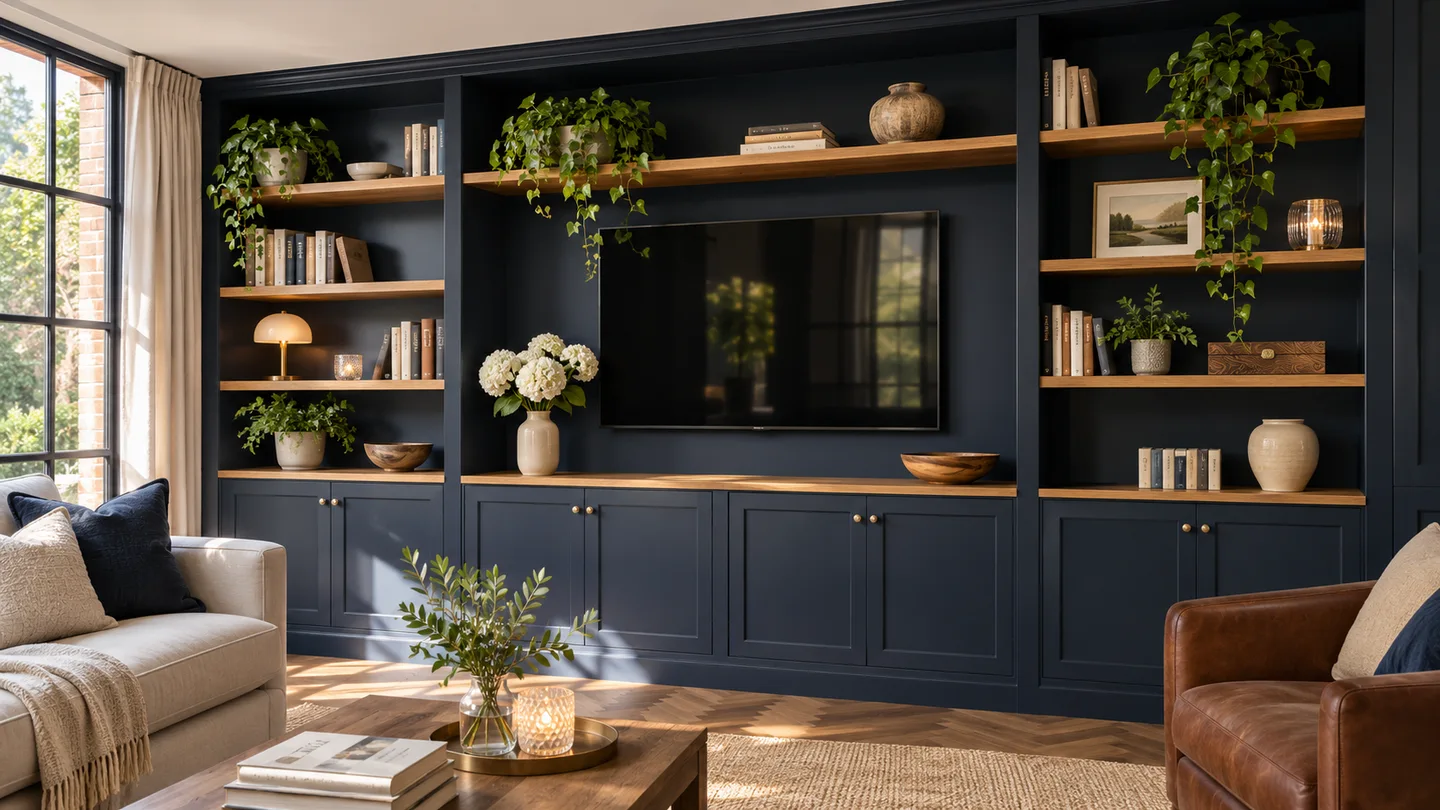
Media Walls and Entertainment Centers
A media wall hides or frames a television, with cabinets for components, speakers and cables. Ventilation, wire management and TV mounting blocks should be planned ahead.
Bookcases and Display Shelving
Floor-to-ceiling bookcases flanking a fireplace or filling an entire wall are classic. Shelf thickness and span matter: long spans of thin shelves bow under books, so ask about 3/4-inch thickness with a solid wood edge or a center support.
Window Seats and Benches
A built-in bench with drawers or lift-up lids provides seating and storage in a bay window or entry. Cushions are usually made separately.
Fireplace Surrounds
Cabinets on either side of a fireplace add storage for wood, games or books. Clearances to the firebox are governed by the fireplace manufacturer and local building code, so the cabinet maker will confirm them.
Home Office Desks and Wall Units
A built-in desk with filing drawers, cable cutouts and shelves turns a spare room or alcove into a workspace. Consider outlets, lighting and monitor placement in the design.
Mudroom and Entry Lockers
Hooks, shoe storage and cubbies keep the entry organized. Many families in the area use this for sports gear and backpacks.
Materials and Finishes for Built-Ins
Built-ins sit in living spaces and need to match the style of the room.
Plywood, MDF and Solid Wood
Furniture-grade plywood gives strong, stable boxes. MDF is common for painted doors and panels because it stays flat. Solid wood is used for face frames, shelf edges and trim, and in species such as maple, white oak, walnut or alder for stained pieces.
Painted Versus Stained
A painted built-in often looks seamless against white trim. A stained one highlights the wood grain and may be matched to existing floors or furniture. Ask for a sample on the actual species.
Hardware and Lighting
Soft-close hinges and slides, push-to-open latches, rolling ladders, and integrated LED strip lighting are common upgrades. Ask the electrician to plan power in advance.
Low-Emission Panels
California limits formaldehyde in composite wood under CARB Phase 2 rules, so reputable shops should use compliant materials.
Built-Ins in Typical San Ramon Homes
San Ramon has a mix of suburban housing from the 1960s and 1970s through newer developments such as Dougherty Valley. The architecture ranges from ranch and traditional to contemporary, and built-ins should reflect that.
In ranch-style homes, a fireplace wall with symmetrical bookcases can anchor the family room. In open-plan newer homes, a built-in at the end of a hallway, a desk niche off the kitchen or a bench near the garage door can make better use of awkward corners. Seismic safety matters in California, so tall units should be anchored to studs, never just to drywall.
What to Look for in a Built-In Cabinet Maker
Scribing and Trim Skill
Walls and ceilings are rarely perfectly straight. A good shop scribes the cabinets so they meet walls without gaps and matches your crown and baseboard profile.
Examples of Similar Work
Ask to see completed built-ins with similar proportions and finishes, and compare how doors align and how the paint feels.
License and Written Estimate
Check the contractor license at cslb.ca.gov and ask for an itemized written estimate covering design, materials, installation and finishing.
Planning Lighting, Power and Wire Management
Built-ins that hold electronics or display items need electrical planning at the start. Recessed outlets inside cabinets, a pass-through for HDMI and power cables, and a ventilated compartment for components prevent heat problems. LED strips under shelves or inside glass doors need a plan for the driver and switch.
A licensed electrician should handle any new circuits or in-wall wiring. The cabinet maker will leave access panels and cutouts so the wiring does not have to be forced through finished work later.
Closed Doors Versus Open Shelves
Doors keep dust and clutter out of sight but need hinges and clearance. Open shelves show off objects but demand tidy storage. Many designs mix both, with doors below and open shelves above.
Child and Pet Considerations
Tall units should be anchored to the wall, and doors on lower cabinets can carry latches. Rounded edges are safer for young children.
Questions to Ask Before You Sign
Built-ins are permanent and personal, so clarity up front pays off.
- Who is responsible for measuring, and are the drawings included in the price?
- What is the cabinet material and how thick are shelves and backs?
- Is the paint finish sprayed and cured in the shop, and what touch-ups happen after installation?
- How are tall units anchored for earthquake safety?
- What is the payment schedule, and what is the lead time in writing?
- Does the price include trim, crown, scribing and lighting?
Built-Ins Versus Off-the-Shelf Storage
Off-the-shelf shelving and cabinets are cheaper and quick, but they leave gaps, do not match your trim and rarely reach the ceiling. A built-in avoids dusty gaps above, hides cords and unusual walls, and can be finished to match your home. The tradeoff is cost and lead time, since each piece is made to order. Many owners combine approaches, such as stock cabinet boxes with custom face frames, trim and tops.
What Affects the Cost of Built-In Cabinets
Custom built-ins in the Bay Area are often priced per linear foot, with typical ranges starting at a few hundred dollars per foot for simple painted shelving and rising for complex doors, drawers and lighting. A fully fitted wall can reach several thousand to tens of thousands of dollars. These are typical ranges only; the cabinet maker's written estimate is what counts.
Costs depend on height, number of doors and drawers, wood species, finish, lighting and how much trim and scribing is required. If you want to hide a television or components, ask about ventilation and wire management. For kitchen storage, see custom kitchen cabinets.
Get Custom Built-In Cabinets in San Ramon Today
Tell us about the wall or room and we will connect you with a local cabinet maker. There is no fee for the referral.
Free quoteCustom Built-In Cabinets FAQs
What is the difference between built-in and freestanding cabinets?
Built-ins are made to fit a space and are fastened to the structure, with trim that blends with the room. Freestanding furniture can be moved, but rarely uses the space as efficiently.
Can built-ins be removed later?
Yes, though removal may require patching and painting walls. Well-designed built-ins are usually secured with screws and are separable from the structure.
How thick should shelves be?
Three-quarter-inch plywood with a solid wood edge is common. For long spans or heavy books, a thicker front edge or center support prevents sagging.
Do built-ins add value to a house?
They can make a home more attractive and functional, but resale value depends on the market. Check with a local real estate professional rather than relying on general claims.
Do built-ins need a permit?
Simple cabinetry typically does not. Electrical, structural or fireplace-related work may. Ask the cabinet maker or your city building department.
Is the referral free?
Yes. You pay nothing for the introduction and your contract is directly with the cabinet maker.