
Cabinet Refinishing and Painting in San Ramon, CA
San Ramon Custom Cabinets connects San Ramon homeowners with local cabinet makers and finishers for cabinet refinishing and cabinet painting, including stripping, staining, sprayed paint, glazing and clear coats.
We are a free referral service, not the finisher. Share your project and a local pro will follow up with a written estimate and finish samples.
Get a Free Cabinet Painting Quote
Cabinet Refinishing and Painting Explained
Refinishing and painting give existing cabinets a new look without replacing them. The main difference is the result: painting covers the surface in an opaque color, while refinishing refreshes a wood stain or clear coat. Both depend heavily on preparation.
Cabinet Painting
Opaque paint over properly prepared surfaces turns oak or dated honey-colored cabinets into white, gray, green or navy. Hard finishes such as catalyzed lacquer or conversion varnish are sprayed for a smooth coat that resists wear.
Cabinet Refinishing
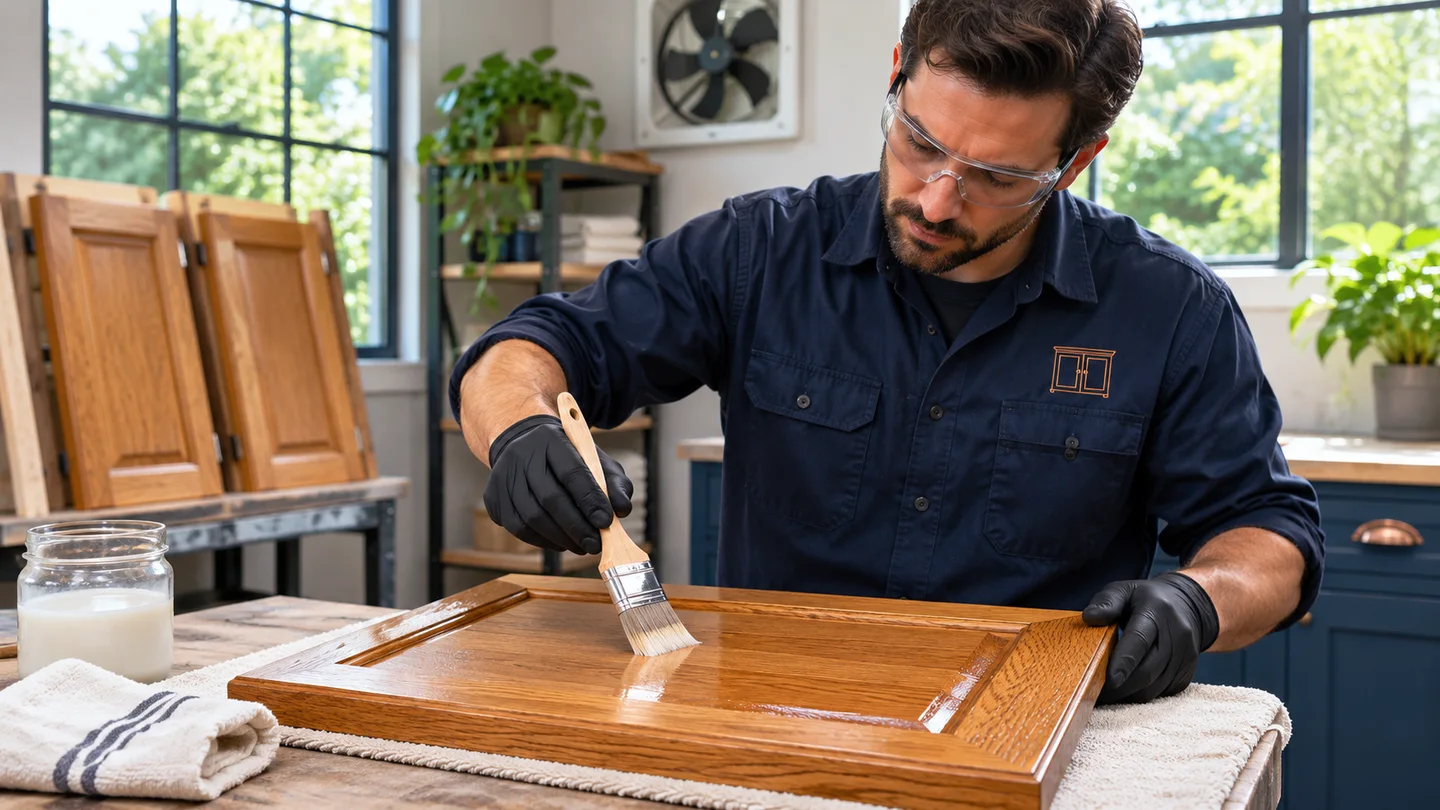
Refinishing keeps the wood visible. Old finish is cleaned, sanded or stripped, the wood is re-stained or toned, and a new clear coat is applied. It suits quality wood cabinets in good shape.
Glazing and Distressing
Glazes add depth in grooves and edges for traditional looks. Distressed finishes suit farmhouse and cottage styles.
Color Matching
Matching an existing stain across doors, frames and new pieces takes experience. A finisher can create samples on your wood before committing.
The Finishing Process
A durable finish is mostly prep. Shortcuts show up as chipping and peeling within months.
Cleaning and Degreasing
Kitchen cabinets collect cooking grease that blocks adhesion. They are cleaned with a degreaser and rinsed before sanding.
Removing Doors and Hardware
Doors, drawer fronts and hinges come off and are numbered so they return to the right places. Spraying is best done on doors laid flat or hung on racks.
Sanding, Filling and Priming
Surfaces are scuffed, dents are filled, and a bonding primer is applied. On oak, grain filler may be needed for a smooth modern look because open grain shows through paint.
Spraying the Finish
Professionals often spray multiple thin coats, with light sanding between them. Catalyzed and water-based coatings cure harder than ordinary wall paint.
Curing and Reinstallation
Finishes harden over days or weeks even after they feel dry. Careful handling and soft-close bumpers help protect the finish in the first weeks.
Types of Finishes and Coatings
Catalyzed Lacquer and Conversion Varnish
Commonly used on professionally finished cabinets for hardness and clarity. They require ventilation and proper spray equipment.
Water-Based Cabinet Enamels
Lower in odor and VOC, with strong modern formulas. Bay Area air quality rules limit VOC content in architectural coatings, and your finisher should use compliant products.
Stains and Toners
Stains color the wood, while toners adjust the tone in the finish. Together they can unify mismatched wood.
Clear Topcoats
Clear coats such as polyurethane or lacquer provide protection and set the sheen from matte to gloss.
Wood, MDF and Laminate: What Can Be Painted
Different surfaces need different preparation.
Solid Wood and Plywood
Maple, birch and alder paint smoothly. Oak needs grain filling for a smooth look. Plywood veneer is generally paintable.
MDF Doors
Stable and smooth, with painted finishes common. Edges absorb paint and need priming.
Thermofoil
Painting peeling thermofoil is hard to do well. Replacement doors are often a better idea.
Laminate Boxes
Laminate can be painted with the right primer, but the finish is less durable than on wood.
Older Homes and Lead Paint
Homes built before 1978 may have lead-based paint on cabinets, trim or walls. The EPA's Renovation, Repair and Painting rule requires firms working in such homes to be certified and follow lead-safe practices. Ask any painter about this if your house is older. Many San Ramon homes were built later, but remodels and older furniture-grade cabinets may still be affected.
Refinishing Versus Refacing
Refinishing is cheaper and faster, but it keeps your existing door style and cabinet layout. For a different look, see cabinet refacing. If boxes are damaged, repair them first.
Preparing Your Kitchen for a Finish Job
Good prep by you helps the pros work efficiently.
Empty the Cabinets
Everything inside the cabinets should be removed before work begins. Keep dishes and food in a clean room away from fumes and dust.
Plan Ventilation and Dust Control
Spraying produces fumes and overspray. Ask how the finisher masks floors, counters and appliances, and what ventilation is planned.
Pets, Kids and Schedule
Keep pets and children out of the work area. Finish cure times mean careful use for a period afterward, and the pro will explain what to expect.
Decide on Colors Early
Test samples on a door in your kitchen lighting. Color shifts with morning and afternoon sun and with under-cabinet lighting.
Choosing Cabinet Paint Colors and Sheen
Color and sheen change how the cabinets read in the room. Whites, soft grays, greens and deep blues are popular. A satin or semi-gloss sheen is easier to wipe clean than flat paint, while matte finishes show less wear in some lighting. Sample boards on the actual doors help you decide, and a finisher can match well-known paint brands such as Sherwin-Williams or Benjamin Moore if you already have a color in mind.
Questions to Ask a Cabinet Finisher
- Are doors sprayed in a shop or on site, and in what coating system?
- What primer and topcoat are used, and how many coats?
- How is prep handled for grease, oak grain and repairs?
- How long before the cabinets can be fully used?
- Are hinges and hardware replaced, painted or reused?
- What is the touch-up policy, and what does the written estimate cover?
Stripping and Restoring Wood Cabinets
Some wood cabinets are worth restoring rather than painting, especially solid maple, cherry or walnut with a damaged finish. The old coating is removed, the wood is cleaned and lightly sanded, and a new stain and clear coat are applied. Stripping is more labor than a scuff-and-recoat, but it can bring back a rich wood look.
Cabinets with multiple old coats, wax buildup or silicone contamination from polishes need extra cleaning, because new finish will not stick to them.
Finishing Bathroom, Built-In and Garage Cabinets
Beyond the kitchen, bathrooms need moisture-resistant coatings, built-ins benefit from matching trim colors, and garage cabinets need tough finishes for abrasion and temperature swings. Tell the finisher where the cabinets are so the coating is chosen accordingly.
How Long a Refinished Kitchen Takes
Timing depends on the number of doors, coats and the shop schedule. Doors are often sprayed off site while frames are done in the kitchen, so you can expect a stretch of several days to a couple of weeks overall, with the finish continuing to harden afterward. Ask for the timeline in writing and for tips on cleaning during the cure period, such as avoiding harsh chemicals and abrasive pads.
What Affects the Cost of Painting or Refinishing
Pricing in the Bay Area is commonly based on the number of doors and drawers plus cabinet frames and boxes. A full kitchen paint job often falls in the range of a few thousand to over ten thousand dollars depending on size, prep and finish. These are typical ranges, and a written estimate counts.
Heavily damaged finishes, oak grain filling, multiple colors, interior painting, on-site versus shop spraying and new hardware all add cost. Ask whether doors are sprayed in a shop or on site and what protection is used.
Get Cabinet Painting in San Ramon Today
Describe your cabinets and we will connect you with a local pro. The referral is free.
Free quoteCabinet Refinishing & Painting FAQs
Can all cabinets be painted?
Most wood, MDF and laminate cabinets can be, though prep varies. Peeling thermofoil is usually better replaced.
How long does painted cabinet finish last?
With good prep and hard coatings, finishes can last many years, though high-use cabinets show wear. Ask what coating system is used.
Is spraying better than brushing?
Spraying yields a smoother, more even finish and is typical for professional work. Brushing and rolling may leave marks.
Will I be without a kitchen?
Doors are often taken to a shop, while frames are finished on site. Ask about the schedule and dust control.
Can I paint cabinets myself?
Yes, but results depend on prep, primer and paint choice. Consumer paint is usually less durable than professional coatings.
Is the referral free?
Yes, and there is no obligation.