
Restaurant Cabinets in San Ramon, CA
San Ramon Custom Cabinets connects San Ramon restaurant owners, cafe operators and build-out contractors with local cabinet makers for restaurant cabinets, front-of-house millwork, host stands, bar backs, service stations and back-of-house storage. The referral is free and carries no obligation.
A restaurant has two kinds of cabinetry: the visible woodwork that guests see, and the hard-working storage behind the line that has to meet health department rules. This page explains each, the materials that suit them, and what to ask a cabinet maker.
Get a Free Restaurant Cabinet Quote
Restaurant Cabinetry for Dining Rooms and Kitchens
Restaurant casework is a mix of fine millwork and utilitarian equipment. A cabinet maker typically coordinates with the architect, the kitchen designer and the equipment supplier so that cabinets align with hoods, sinks, hot lines and refrigeration.
Front-of-House Millwork
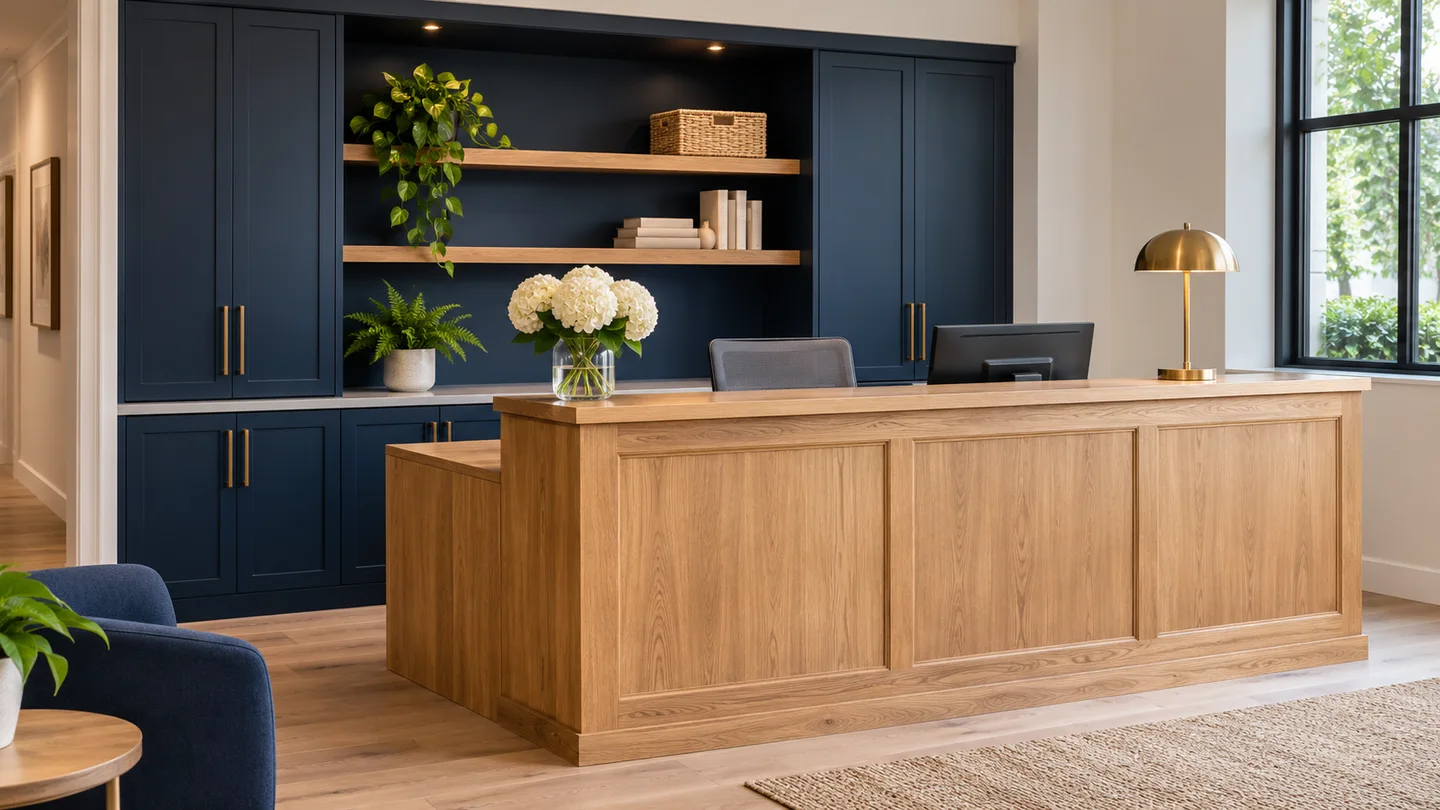
Guests notice the host stand, bar front, bar back shelving, banquette seating, wall paneling and server stations. Species such as walnut, white oak and ash are common, along with painted or veneered panels, and the bar top is often stone, butcher block or epoxy.
Bar and Beverage Cabinets
Bar casework includes back-bar cabinets with glass doors, undercounter coolers, speed rails, glass racks and display shelving. Water-resistant materials and drains are usually part of the plan.
Server Stations and Waiter Stands
Server stations hold flatware, glassware, napkins, point-of-sale terminals and tableware. Drawer dividers, shallow shelves and ventilated doors for electronics are common.
Host Stands and Take-Out Counters
Host stands combine a reservation stand, menu storage and a hidden shelf for phones and tablets. Take-out counters need a durable top, cubbies for orders and safe storage for packaging.
Back-of-House Cabinets and Food-Zone Materials
Back-of-house areas are regulated. In California, the Retail Food Code requires that surfaces in food preparation, storage and warewashing areas be smooth, durable, nonabsorbent and easily cleanable, and it applies to cabinets as well as walls and floors.
NSF/ANSI Standards
NSF/ANSI 2 covers food equipment and NSF/ANSI 51 covers food-contact materials. Where cabinets and shelving hold or touch food, plan for stainless steel, or for materials rated for the use. Environmental health reviewers often look for NSF-listed equipment.
Stainless Steel Casework
Type 304 stainless steel is the standard for food-prep tables, sink bases and shelving. It resists corrosion and cleans easily, and a cabinet maker may fabricate or coordinate with a metal shop for these elements.
Plastic Laminate, HDPE and Sealed Surfaces
High-pressure laminate with sealed edges, solid HDPE panels and marine-grade materials suit dry storage and some prep cabinets. Plywood with open edges is a poor choice near water.
Open Shelving and Legs
Many health departments prefer shelving and equipment raised on legs or mounted so the floor beneath can be cleaned. Coved bases and sealed joints keep dirt from collecting.
Health Department Review and Permits
Plan Check With Environmental Health
In San Ramon, which lies in Contra Costa County, food facilities typically go through plan review with the county's environmental health division before construction. Submit finish schedules and cabinet specifications as requested.
Building and Fire Review
The City of San Ramon building division reviews tenant improvements, and the fire district reviews hoods and suppression. Your architect or contractor coordinates these reviews; the cabinet maker builds to the approved drawings.
Accessibility
Host stands, bar sections and self-service counters generally need accessible portions. See ADA-compliant cabinetry for the key dimensions.
Durability, Cleaning and Layout
Moisture and Heat
Restaurants have steam, grease and daily washdowns. Choose finishes that tolerate heat and moisture, and keep cabinets away from direct fryer or range heat.
Hardware and Slides
Heavy-duty stainless or coated hinges, and full-extension slides rated for high loads, handle the daily cycle of use.
Ergonomics and Flow
Drawers at hip height, shelves within a comfortable reach, and storage located near each station save steps during service. Design from the menu and line, not just the floor plan.
Seating Millwork
Booths and banquettes combine plywood frames, padded upholstery and wood trim. Upholstery fabrics should be commercial grade and cleanable.
Cabinets by Type of Restaurant
Full-Service Dining
Full-service restaurants need the largest range of casework: host stand, server stations, bar, banquettes and a back-of-house storage plan. The look of the front of house usually follows a design concept developed by the owner and designer.
Cafes, Bakeries and Coffee Shops
Counter-service spaces depend on a well-planned order counter, display cases, pastry shelving and a back bar. Water-resistant bases and easily cleaned tops are important for espresso stations.
Bars, Breweries and Tasting Rooms
Bars and tasting rooms use heavy bar tops, back-bar millwork and storage for glassware and kegs. Moisture and spill resistance are the main concerns.
Ghost Kitchens and Take-Out Concepts
These lean on stainless prep, shelving and pickup cubbies. Casework is mostly utilitarian, with a pickup counter that looks tidy to delivery drivers.
Questions to Ask a Cabinet Maker
Have You Worked With Restaurant Plans?
Experience with food-service drawings means the shop knows to leave clearances for equipment, to seal joints and to submit finish schedules.
Who Supplies Stainless and Countertops?
Clarify which parts the shop provides and which come from other vendors, so nothing is missed in the schedule.
What Is the Installation Window?
Restaurants have tight opening dates. Ask how the shop plans around inspections and how it handles delays.
What Affects the Price of Restaurant Cabinets
Restaurant casework varies from basic laminate storage to premium bars. In the Bay Area, a bar back or banquette run may cost several thousand dollars or more, and stainless fabrication is priced separately. Those are typical ranges only; a written estimate is what counts.
Price depends on materials, size, hardware, the finish and the schedule. San Ramon Custom Cabinets is a free referral service and does not set prices; ask for itemized estimates and compare scope. For general tenant improvement steps, see commercial cabinetry.
Get Restaurant Cabinets in San Ramon Today
Tell us about your restaurant concept, the size and your opening timeline. We will connect you with a local cabinet maker who can quote the work, at no cost to you.
Free quoteRestaurant Cabinets FAQs
What material should I use for kitchen cabinets in a restaurant?
Stainless steel is standard for food-prep areas. Laminate with sealed edges may work for dry storage, subject to health department review.
Do restaurant cabinets need NSF approval?
Equipment and surfaces that contact food are often expected to be NSF-listed or to meet NSF/ANSI standards. Confirm with the environmental health reviewer.
Who reviews restaurant plans in San Ramon?
The county environmental health division reviews food facility plans, and the City of San Ramon building division reviews construction. Your architect coordinates both.
Can the same shop do bar and dining room millwork?
Many cabinet makers do front-of-house woodwork, but stainless and kitchen equipment may be provided by other trades.
How long does restaurant casework take?
Lead times vary by shop and materials. The written estimate should include a schedule; we do not promise one.
Does San Ramon Custom Cabinets build the cabinets?
No. We are a free referral service that connects you with local cabinet makers, who provide the written estimates.